The EU-India Free Trade Agreement: what it entails, who stands to gain and what to watch out for
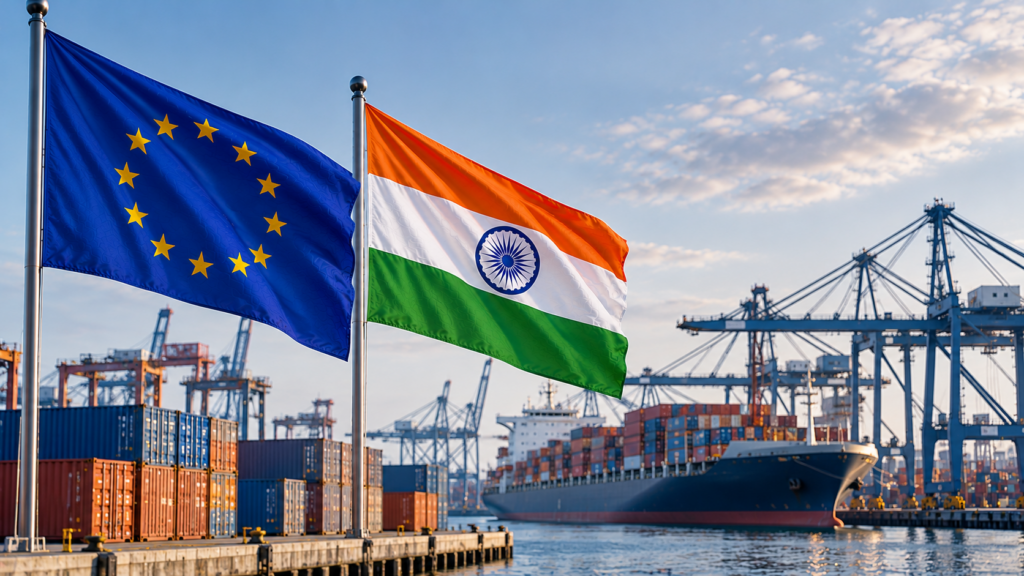
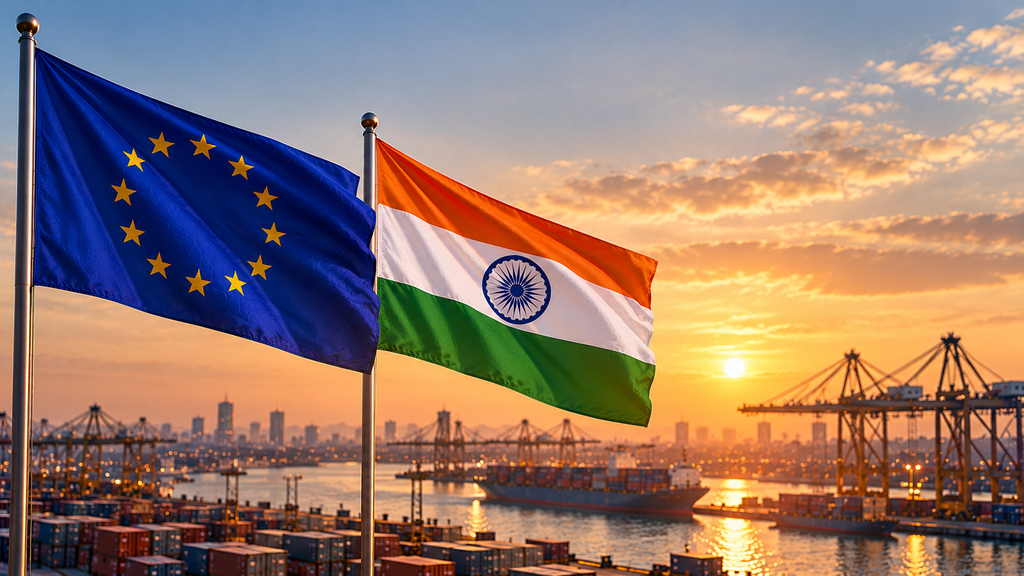
Almost twenty years after negotiations began, the EU and India agreed on the text of a Free Trade Agreement (FTA) on 27 January 2026. The agreement, which is expected to be ratified by the end of 2026, will enable free trade between the two major markets.
For Slovak export and import companies, it may be of particular interest in sectors such as the chemical industry, engineering, the automotive industry, pharmaceuticals and medical technology.
What is the EU–India Free Trade Agreement?
It is a comprehensive trade agreement between India and the 27 EU Member States, governing trade in goods and services, rules of origin, customs procedures, digital trade, intellectual property and sustainable development. It covers, amongst other things, industrial products, motor vehicles, plastics, pharmaceutical products, chemicals and other raw materials for heavy industry.
Negotiations on FTA began in 2007, were suspended in 2013 and resumed in 2022. They were politically concluded on 27 January 2026 in New Delhi. The agreement, hailed as the ‘mother of all agreements’, will create the world’s largest free trade area – covering a quarter of the world’s population and 25 per cent of global GDP. Customs duties on more than 90 per cent of goods exported from the EU to India are to be eliminated or reduced.
Trade in goods between the EU and India reached approximately €120 billion in 2024, with the EU importing goods worth around €71 billion from India and exporting goods worth almost €49 billion to India.
The agreement has not yet entered into force and its provisions are not yet being applied. On 11 September 2026, the European Commission submitted proposals to the Council of the EU concerning the signing and conclusion of the agreement. In doing so, the Commission proposed following the fast-track procedure presented in February 2026 by the Slovak Commissioner for Trade and Economic Security, Maroš Šefčovič.
The published text of the agreement may still undergo legal and linguistic revision and will be considered final only after signature. The agreement will only become binding once the relevant internal legal procedures have been completed on both sides. Following signature, a decision by the Council of the EU on the conclusion of the agreement and the consent of the European Parliament are required, and the agreement must also be ratified by India; only then can the agreement enter into force. Until it enters into force, therefore, the agreed preferential tariffs cannot be applied. At the same time, the partners are continuing negotiations on two further separate agreements – an investment protection agreement (IPA/BIT) and an agreement on geographical indications (GI).
What the agreement will bring
Tariffs Reduction/Elimination
One of the main benefits will be the gradual reduction or elimination of tariffs. According to the European Commission, tariffs on 96.6 per cent of the value of goods exported from the EU to India will be eliminated or reduced. However, the specific extent and pace of tariff reductions vary for individual products and depend on the agreed timetable.
This represents a significant change for European exporters. For example:
- customs duties on chemicals, which currently reach up to 22 per cent, are to be eliminated for almost all products;
- for machinery and electrical equipment, where tariffs currently reach up to 44 per cent, zero tariffs are envisaged for almost all items,
- for pharmaceutical products, duties of up to 11 per cent will be removed for most items,
- for plastics, duties of up to 16.5 per cent will be abolished for almost all items,
- for passenger cars, customs duties will be gradually reduced from 110 per cent to 10 per cent within a quota of 250,000 vehicles per year.
However, not all reductions will take effect immediately. For many products, transitional periods have been set, often lasting five to seven years, and in some cases up to ten years. The specific impact will therefore always depend on the product’s tariff classification and the timetable agreed for that particular item.
Rules of origin
It will not be sufficient for goods to have been dispatched from India or the EU in order to qualify for preferential tariffs. The goods must comply with the rules of origin under the agreement, meaning they must have undergone sufficient processing in the EU or India.
The agreement provides for a system of self-declaration of origin, which is intended to simplify exports and imports, particularly for small and medium-sized enterprises. However, customs authorities will be able to verify the origin in detail.
For businesses, this means that it will be important to be able to prove the origin of individual inputs right from the outset when setting up the supply chain.
Services and other areas
The agreement does not cover goods alone. It also includes commitments in the areas of services, digital trade, intellectual property, customs procedures and sustainable development.
India is granting European service providers better access, particularly in the financial and maritime services sectors. The agreement also contains rules on the protection and enforcement of intellectual property rights, as well as measures to simplify customs procedures.
Who stands to gain from the agreement
On the Indian side, the new opportunities relate mainly to textiles, footwear, leather, seafood, the chemical industry and pharmaceuticals.
On the EU side, manufacturers of chemicals, machinery, pharmaceutical products, medical devices, motor vehicles and other industrial goods will benefit most from improved access to the Indian market. The agri-food sector also holds significant potential.
For Slovak companies, the export of industrial products may be of particular interest. According to the European Commission, around 345 Slovak companies currently export to India. Slovak exports of goods to India amount to approximately €252 million per year.
Chemical industry: both an opportunity and a challenge
The chemical industry is one of the sectors in which the agreement could have a significant practical impact.
Customs duties of up to 22 per cent currently apply to exports of chemical products from the EU to India. Under the agreement, these duties are to be removed for most chemical products, with many items seeing their duties abolished as soon as the agreement comes into force. For plastics, where duties are as high as 16.5 per cent, a phased elimination is envisaged, mainly over a period of seven years. The value of chemical product exports from the EU to India reached approximately €3.2 billion in 2024.
For Slovak manufacturers, this may mean improved price competitiveness in the Indian market. On the other hand, easier access for Indian chemical products to the EU market may increase competitive pressure on European manufacturers.
A reduction or removal of customs duties does not mean exemption from obligations under European chemicals legislation. When importing chemical substances and mixtures from India, it is particularly important to check the requirements of the REACH and CLP Regulations. Depending on the specific product and the importer’s status, this may involve, for example, obligations relating to the registration of substances, classification, labelling and packaging. For substances imported from a manufacturer based outside the EU, it is also necessary to assess who is responsible for ensuring compliance with the relevant REACH obligations, including the possibility of appointing an only representative for the third-country manufacturer.
Exports to India versus imports from India
It is important for a Slovak or other European company to distinguish whether it is exporting goods to India or importing them from India.
When exporting from the EU to India, the key factors will be the reduction in Indian customs duties and the timetable for their gradual elimination. The company will also have to comply with the rules of origin and the requirements of the Indian market.
Conversely, when importing from India to the EU, the decisive factors will be whether the goods meet the rules of preferential origin and whether the importer can fulfil all the requirements of European regulations. Preferential tariffs alone do not constitute an exemption from EU rules on product safety, chemicals, foodstuffs or other regulated areas.
What to watch out for
First and foremost, it is important to bear in mind that the agreement has not yet entered into force. Companies should therefore not automatically incorporate future preferential tariffs into their commercial contracts.
It will also be important to note:
- Transition period – savings may not materialise immediately, and the timetable may vary for each product.
- Rules of origin – incorrect or insufficiently documented origin may lead to the refusal of preferential treatment and the imposition of additional duties.
- Regulatory requirements – the relevant requirements regarding safety, chemicals, foodstuffs and technical standards remain in force for imports into the EU.
- Trade defence – the agreement does not prevent the use of trade defence instruments, such as anti-dumping measures.
- Sensitive sectors – certain products remain excluded from liberalisation or are subject to quotas and a phased reduction of duties.
Carbon Border Adjustment Mechanism (CBAM) also deserves attention. The trade agreement does not, in itself, remove the obligations arising from EU rules on carbon border adjustment. It merely introduces a general rule on the equal application of rules to goods covered by the trade agreement and goods imported from third countries. The annex also provides for technical dialogue, cooperation and support, particularly for small and medium-sized enterprises. For the products in question, therefore, tariff preferences and carbon costs must be assessed separately.
What businesses can do today
Although the agreement has not yet entered into force, companies can prepare for it now. In practice, we particularly recommend:
- check the tariff classification of products and compare current and future duty rates,
- check the supply chain and rules of origin,
- when importing chemical products, verify obligations under REACH and CLP,
- assess whether specific goods are subject to further regulatory or trade defence measures,
- in the case of long-term supply contracts, to consider clauses governing changes in customs duties, the allocation of customs risk and any changes in regulatory costs.
When making investments or entering into long-term business relationships with Indian partners, it is also advisable to pay attention to the governing law, dispute resolution and debt recovery.
Conclusion
The EU–India Free Trade Agreement could significantly alter the terms of trade between the two markets and open up new opportunities for Slovak companies as well. The greatest potential is expected in industrial sectors, the chemical industry, pharmaceuticals, engineering and the automotive sector.
However, the practical benefits of the agreement will not lie solely in the reduction of customs duties. For any given company, the decisive factors will be correct tariff classification, rules of origin, compliance with regulatory requirements and the appropriate structuring of contractual relationships.
The agreement may simplify trade and reduce customs costs. However, compliance will not disappear.
This article is for information purposes only and does not constitute legal advice.
Autor:
JUDr. Viktória Draškaba, MEconSc.
Partner